Buying Guide
Toggle navigation menu
Unscented Guide

Best Unscented Cat Litter: The Types That Still Beat Odor

Unscented cat litter, chosen properly. What the label promises, which formats hold up without perfume, and how to keep the box fresh once the fragrance is gone.

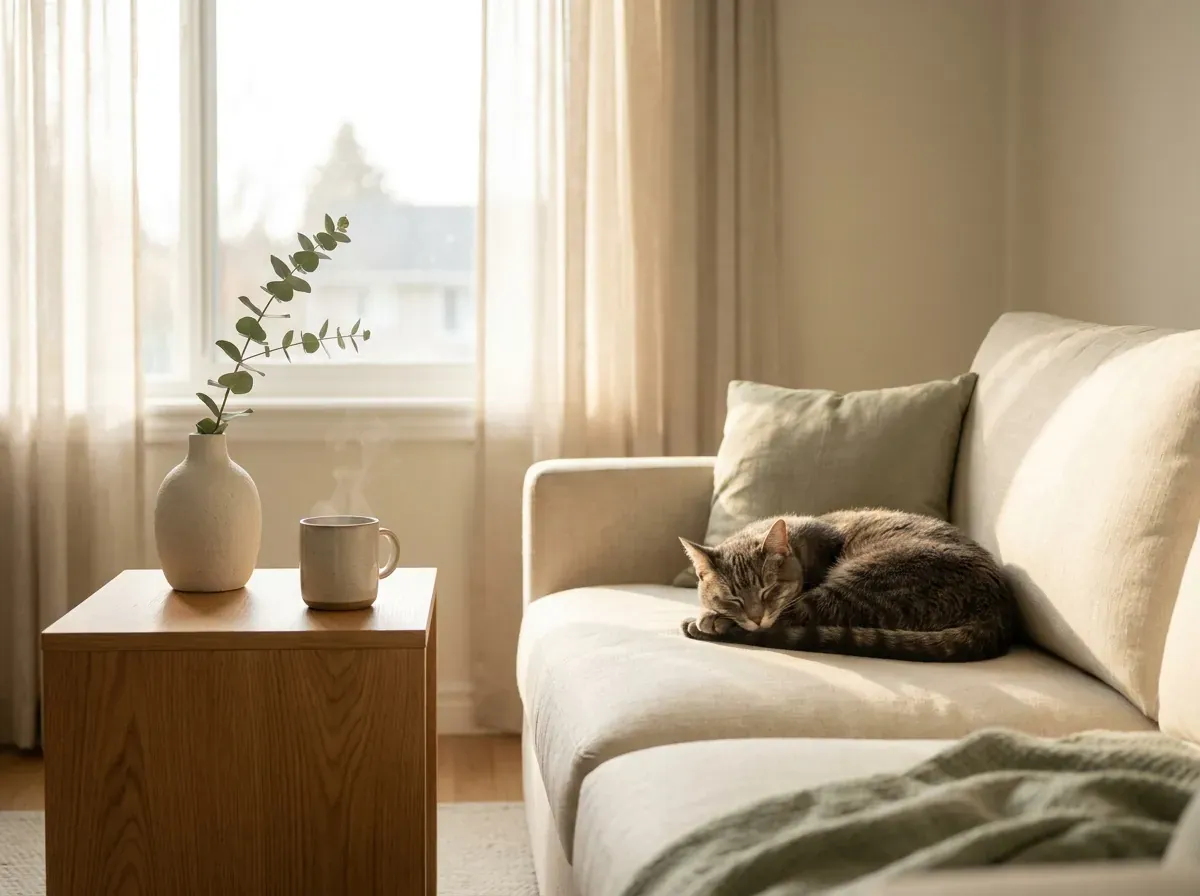
A tabby cat sleeping on a cream sofa next to a sprig of fresh eucalyptus, in a fragrance-free, airy living room
Key Takeaways

What matters most

Perfume does not remove odor. It adds a second smell on top of the first, and your cat has to stand in the result.

Unscented is the cleanest baseline because it lets you judge a litter on clumping, dust, and urine handling instead of on fragrance strength.

Unscented does not mean odorless. Pine, corn, and paper all carry a material smell of their own, so check the bag before buying the big one.

If the box smells worse after you switch, nothing broke. You are finally smelling it honestly, and the fix is routine plus an adsorbent, not perfume.

Why Unscented First

Perfume does not remove a smell, it stacks a second one on top

The smell you are fighting is mostly ammonia, released as cat urine breaks down in the litter. Fragrance does nothing to that. It adds a floral or powder note beside it, and for a few days the mixture reads as clean. Then the ammonia keeps building and you end up with both smells at once, which is worse than either alone.

Your cat gets the same deal, only stronger. A cat's nose is built for detecting things ours misses entirely, and the box is a place it has to stand in, dig in, and crouch over. A heavy perfume there is not a pleasant touch. It is a reason to try the bath mat instead. Cornell's house-soiling guidance and Merck's litter-box advice both push in the same direction: keep the box plain, clean, and easy to accept.

So the case for unscented is not that fragrance is dangerous. It is that fragrance hides the signal you need. Once the perfume is gone, a box that smells is telling you something useful, and you can fix the actual cause instead of buying a stronger cover-up.

That is also why unscented pairs naturally with low dust. Both are about taking things out of the box rather than adding them. The dust free guide covers the particle side of the same instinct.

Reading The Label

Four phrases on the bag, and what each one really tells you

Unscented

No perfume was added. It does not mean the litter has no smell. Clay carries a faint mineral note, pine smells like pine, and corn smells faintly sweet. Those are material smells, not added ones, and most people stop noticing them within a week.

Fragrance-free

On litter bags this is used interchangeably with unscented, and no rule forces a brand to pick one word over the other. If the distinction matters to you, read the ingredient list on the back rather than the claim on the front.

Naturally scented

This is a scented product. It usually means a plant-derived fragrance or an essential oil instead of a synthetic one, which changes the sourcing story and not the fact that something is being added to the air your cat breathes in the box.

Odor control, in big letters

A claim, not a method. The useful bags say how: fast-forming clumps, activated carbon, zeolite, or baking soda. If the bag never names a mechanism anywhere on the back, treat the claim as decoration and judge the litter on the pour and the first week.

Formats Compared

Six unscented formats, and who each one suits

1. Fine-grain unscented clumping clay

The safest first move, because it keeps the texture most cats already know and only removes the perfume. Clump strength is what to compare between brands here. Hard clumps carry urine out whole, and that is most of the odor job done before anything else is added.

2. Unscented low-dust premium blends

Screened clay with the fines taken out, sometimes with carbon or zeolite blended in. This is the profile to look at when both fragrance and dust bother someone in the house. It costs more per bag and usually less per month, because you scoop rather than replace.

3. Tofu and plant starch

Soft, light pellets that clump, sold unscented as the default in most lines. Cats tend to accept them quickly. The catch is that plant material has a faint sweetness of its own, and odor strength varies more between brands than the category suggests.

4. Wood and pine

Pine carries a real smell even when nothing is added, which some people love and others cannot live with. Pellets stay clean until they absorb, then break down to sawdust. See the wood-litter guide if pine is on the shortlist and the smell question is open.

5. Recycled paper

The gentlest option under paw, which is why vets often suggest it after surgery. It is unscented by nature and light on odor control, so it works best with more frequent full changes. More in the paper-litter guide.

6. Crystal and silica

Absorbs liquid rather than clumping, and is usually sold without fragrance. Solid waste comes out daily and the crystals get stirred. Texture is the divider: some cats walk straight back out. Compare that in the crystal guide.

Odor Without Perfume

Take the fragrance out, then do the four things that actually work

Scoop every day, twice if you can. Ammonia comes from urine sitting in the box, so the fastest lever you have is not leaving it there. Keep the litter deep enough that clumps form all the way through instead of welding themselves to the plastic. Follow the one-box-per-cat plus-one rule, because a shared box fouls faster than the litter can keep up with. And give the remaining ammonia something to hold onto.

That last one is what an adsorbent does. Activated carbon is riddled with tiny pores, and odor molecules stick to that surface instead of drifting into the room. It is the same material that sits in a water filter, and it works without adding a smell of its own, which is the whole point when you have just spent money removing one. Purrify's guide to unscented litter for sensitive cats covers the same ground from the odor side.

The practical version is an additive rather than another litter switch. Purrify is fragrance-free activated carbon, made in Canada, that you sprinkle over the litter your cat already accepts. The texture stays the same, which matters when acceptance was hard won, and the odor work moves off the litter's shoulders. If that is the gap you are trying to close, the bag sizes are on purrify.ca.

The First Two Weeks

What to expect after you drop the scented bag

Days 1 to 3: it smells stronger

This is the most common reason people give up. The box has not got worse. The cover has come off. Scoop on schedule and judge nothing yet.

Days 4 to 7: the baseline appears

By now you can tell whether a scooped box goes quiet within a minute or keeps talking. A box that still smells right after a scoop is a depth, box-count, or adsorbent problem.

Week 2: the cat votes

Watch for digging that stops early, paw shaking, or anything left just outside the box. Cornell links exactly this kind of avoidance to a box that no longer feels acceptable.

End of week 2: decide once

Keep the litter if scooping controls the smell and the cat is using the box normally. If either half fails, change one thing, not three, and give it another week.

Move gradually rather than swapping the whole box overnight. Mixing the new litter in over a week or so lets your cat get used to the texture while the smell of the old one is still there. The step-by-step switching guide has the day-by-day ratios. If dust is bothering someone in the home as well, the OSHA overview of crystalline silica is a fair reminder to take airborne particles seriously alongside fragrance. OSHA overview

FAQ

Common questions about unscented cat litter

Is unscented cat litter better than scented?

For most homes, yes, as a starting point. Perfume does not remove odor, it sits on top of it, and it adds a smell your cat did not ask for. Taking fragrance out lets you judge a litter on clumping, dust, and how fast it handles urine, which are the things that actually decide whether the room smells.

What is the difference between unscented and fragrance-free?

On a cat litter bag the two usually mean the same thing: no added perfume. Neither promises the litter has no smell of its own. Pine, corn, and recycled paper all carry a natural material smell, and some people notice it more than they expected, so smell the bag before you commit to a large one.

Can unscented cat litter still control odor well?

Yes. Odor control comes from fast clumping, enough depth to trap urine, daily scooping, and an adsorbent such as activated carbon or zeolite. None of that needs perfume. Unscented simply means the formula is not leaning on a cover-up as its main strategy.

Do cats prefer unscented litter?

Cats have a far more sensitive nose than we do, and a strong perfume in a box they have to stand in is a real reason to go somewhere else. Vet guidance on litter-box avoidance consistently points toward plain, low-dust, cat-accepted setups rather than heavily fragranced ones.

Who benefits most from unscented cat litter?

Sensitive cats, kittens learning the box, homes where a person reacts to fragrance, and anyone trying to work out which part of their litter setup is causing a problem. Removing the perfume takes one variable out of the picture.

My unscented litter smells worse. What went wrong?

Nothing changed except that you can now smell the box honestly. The perfume was covering ammonia, not removing it. Scoop at least once a day, keep the litter deep enough for clumps to form, add a box if you have more cats than boxes, and give the ammonia something to adsorb onto.

Written and reviewed by the Premium Cat Litter editorial team, and checked against the sources cited above. Read how we research and correct our work in our editorial policy.

Compare Unscented Options Against the Full Buying Framework

Once the field is narrowed to fragrance-free formulas, compare them on odor control, clumping, cost, and household fit before you buy.