Buying Guide
Toggle navigation menu
Multi-Cat Guide

Best Cat Litter for Multiple Cats: What Changes With Each Extra Cat

Two cats do not double the work, they change it. The litter profile that survives a shared box, how many boxes you actually need, and where the odor really comes from.

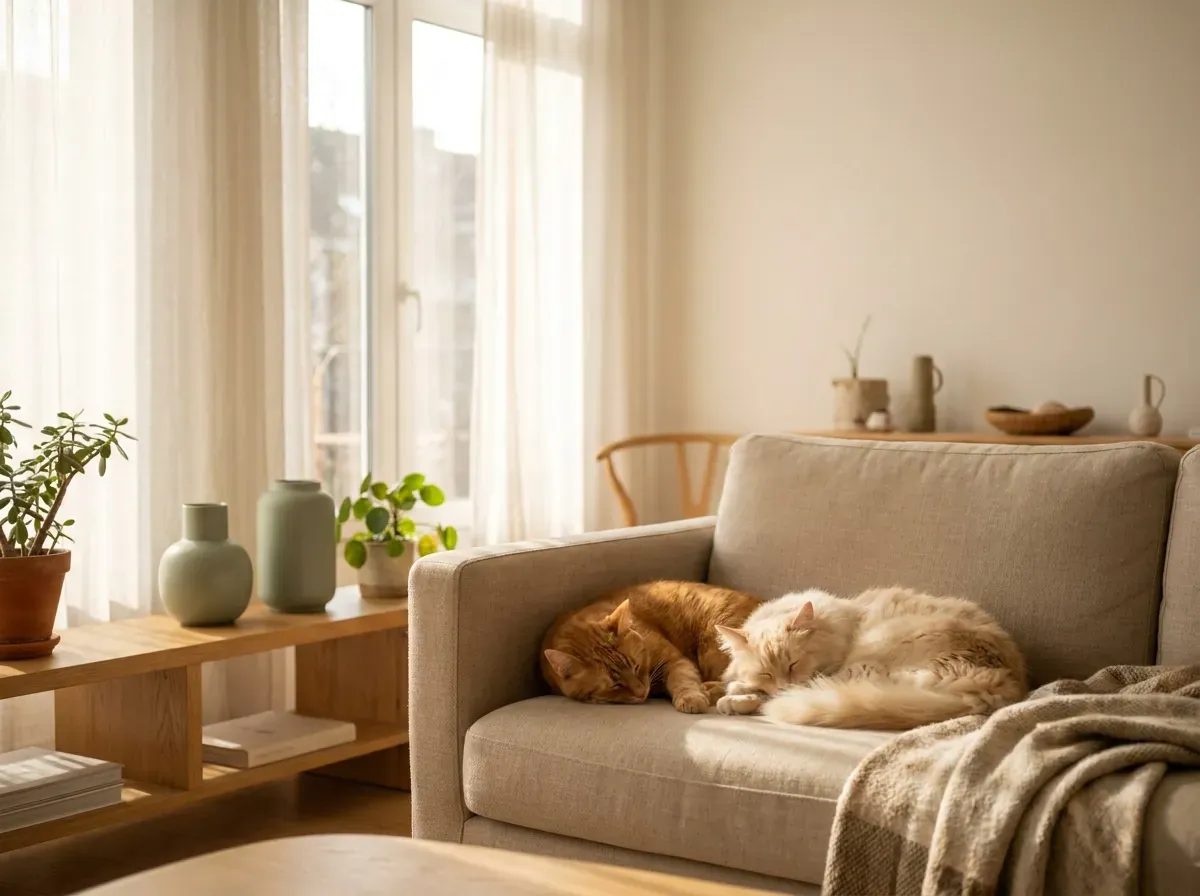
Two cats, one ginger and one cream, curled asleep together on a linen sofa in a warm, sunlit living room
Key Takeaways

What matters most

Adding a cat does not just double the waste. It adds competition for the box, which is the part that turns into a mess on the floor.

Box count comes before litter choice. One box per cat plus one spare, spread across the home, not lined up in the same corner.

Buy for clump strength and a named odor mechanism. Multi-cat boxes expose weak clumping within days and defeat perfume almost immediately.

Ammonia is the multi-cat smell, and it is a gas. Scooping removes its source and an adsorbent holds what is left. Fragrance does neither.

What Changes

The second cat does not double the problem, it changes its shape

More waste is the obvious part. The part that catches people out is competition. One cat uses a box. Two cats negotiate over it, and cats negotiate by waiting, avoiding, and sometimes by refusing to walk past each other. A litter that was fine for one cat can look like a failure the week the second one arrives, when nothing about the litter has changed.

The waste side is real too, and it is not gentle. Two cats put roughly twice the urine into the same volume of litter, so the box crosses from working to spent in about half the time. Weak clumps that held together with one cat start breaking on the scoop, and every broken clump leaves urine behind to keep releasing ammonia.

That is why the shopping question in a multi-cat home is narrower than it looks. You are not hunting for a magic formula. You are looking for a litter whose clumps stay hard under twice the load, plus enough boxes that nobody has to queue. Get those two right and most of the rest sorts itself out.

If the smell is the thing that pushed you to search, jump ahead to the odor section, or go deeper with our odor-control guide.

Boxes First

Fix the setup before you spend another dollar on litter

Count: one per cat, plus one

Merck's guidance is one box per cat plus a spare, so two cats want three and three cats want four. It sounds excessive until you watch what happens without it. The spare is the box that gets used when one cat is sitting in the doorway of another, and it is far cheaper than replacing a rug.

Placement: separate rooms, two ways out

Boxes in a row against one wall count as one location to a cat. Spread them across floors and rooms so a cat can always reach one without walking past a housemate it is avoiding. Nothing in a cupboard with a single exit, where the cat using it can be cornered.

Size: bigger than the pet aisle suggests

A box a cat cannot turn around in comfortably gets used less, and gets used badly. Larger, open boxes generally work better in shared homes. Covered boxes hold odor in for you and also hold it in for the cat, which is the animal that has to go inside.

Peace: watch who guards what

Cornell ties house soiling to boxes that are dirty, crowded, or hard to reach in peace. If one cat keeps missing the box, spend a few days watching the traffic before blaming the litter. The answer is often another cat standing somewhere it does not look like it is standing.

A quick test that costs nothing: add one more box in a room that has none, and change nothing else for a week. If the accidents stop, you had a setup problem, not a litter problem. If they continue, and especially if a cat is straining or going more often than usual, that is a vet visit rather than a shopping decision.

What To Buy

Six things to compare once the boxes are sorted

1. Clump strength above everything

In a shared box, clumps get disturbed before they have fully set. A litter that hardens fast and lifts whole removes urine from the box on the first attempt. One that crumbles leaves residue behind that goes on producing ammonia for days.

2. A named odor mechanism

Activated carbon, zeolite, or baking soda tell you how a litter plans to handle smell. "Powerful odor control" on the front of a bag tells you nothing. In a multi-cat home the difference shows up in about a week.

3. Unscented, every time

Perfume is outmatched here, and it adds a smell to a box several cats already have opinions about. Take the fragrance out so you can tell whether the routine is keeping up. Our unscented guide covers what replaces it.

4. Dust that stays down

Three cats digging in the same box put a lot more in the air than one, and the fines end up on your floors. The dust free guide has the pour and scoop tests worth running before you buy the big bag.

5. Tracking you can live with

Every extra set of paws multiplies the scatter. Larger grains and a mat at the exit do more than any formula claim. See the low-tracking guide if the floors are the daily irritation.

6. Weight and restock reality

You will be carrying a lot more litter than a single-cat home. Bag weight, how often you have to buy, and whether the formula is reliably in stock are practical constraints, not afterthoughts. Run your numbers through the cost calculator.

The Odor Problem

The multi-cat smell is ammonia, and it is a gas

Cat urine contains urea. Bacteria break urea down and ammonia comes off it, which is the sharp smell that hits you at the door and makes your eyes sting over a neglected box. Two cats produce it twice as fast in the same litter, which is why the box that was fine on Monday is announcing itself by Thursday.

NIOSH treats ammonia as an air-quality concern worth limiting. A litter box is nothing like an industrial exposure, but it is the same molecule, and the practical lesson is the same: deal with it at the source instead of adding something on top of it. NIOSH source

At the source means scooping twice a day, keeping depth right, and having enough boxes that no single one takes the whole load. After that you are left with the ammonia already in the air, and a gas walks straight past any grain size you can buy. That is the job an adsorbent does. Activated carbon is full of microscopic pores that odor molecules stick to, so the smell stops arriving rather than being masked. Purrify's guide to litter and odor for multiple cats covers the two-cat setup in detail, and their multi-cat odor page takes the same problem room by room.

The reason an additive suits multi-cat homes specifically is that it does not ask your cats to accept a new texture. Getting three cats to agree on a litter is hard enough once. Purrify is fragrance-free activated carbon, made in Canada, sprinkled over whatever is already in the box, so the litter decision stays settled and the odor problem moves elsewhere. See the bag sizes on purrify.ca, including the larger pouch meant for homes running several boxes.

Routine

The formula only performs if the routine keeps up

Scoop twice a day

Morning and evening, every box. This is the single biggest lever in a shared home, and it costs about four minutes. Waste that leaves early never gets the chance to turn into ammonia.

Top up, do not just scoop

Every clump you remove takes litter with it. Without a weekly top-up the depth quietly drops until clumps start welding to the base, and then the whole box has to go early.

Stagger the full changes

Do not reset every box on the same day. Rotate them so there is always at least one box a cat recognises, which matters more than it sounds when a nervous cat is involved.

Keep boxes distributed

Cats do better when boxes are easy to reach and not all stacked into one zone of the home. A box nobody wants to walk to is not a box.

If you plan to move the whole household onto a new litter, use a gradual switching process rather than replacing every box at once. With several cats, do one box at a time and leave the others familiar, so a cat that dislikes the new texture still has somewhere acceptable to go. If repeated refills are the bigger pain point, compare options with the lightweight guide, and set the cadence with the change-frequency guide.

FAQ

Common questions about litter for multiple cats

What is the best cat litter for multiple cats?

The profile that holds up is a hard, fast-clumping unscented litter with a named odor mechanism such as activated carbon or zeolite. Multi-cat boxes expose weak clumping within days, and perfume stops working almost immediately once the load doubles. Format matters less than clump strength and how the litter behaves on day ten.

How many litter boxes do two cats need?

Three. Merck guidance is one box per cat plus one spare, and it holds for the same reason a single shared bathroom causes arguments. Three cats want four boxes. The spare is not indulgence, it is the box that gets used when one cat is guarding another.

Does premium litter matter more in a multi-cat household?

Usually yes, because stronger clumps, better odor adsorption, and lower maintenance become more valuable as the waste load rises. The gap between a good and a mediocre litter is small with one cat and obvious with three.

Can better litter replace having enough litter boxes?

No. A premium formula cannot fix too few boxes, boxes clustered in one room, or a cat blocking the hallway to the only one. Fix the setup first, then the formula, or you will keep buying litter to solve a furniture problem.

Why do my cats stop using a box that looks clean?

Because it is clean to you and not to them. A box a cat has to queue for, or one another cat has claimed, reads as unavailable no matter how fresh the litter is. Cornell links house soiling directly to boxes that are dirty, crowded, or hard to reach in peace.

Should all my cats use the same litter?

Start there, because one type is cheaper to buy and simpler to maintain. If one cat consistently refuses, offer a second box with a different litter beside the first and let the cat choose. A cat voting with its paws is giving you better data than any review can.

How often do multi-cat boxes need a full change?

Sooner than a single-cat box, because more urine goes into the same volume of litter. Scoop at least twice a day and expect the calendar to move earlier as you add cats. Our change-frequency guide has the cadence by litter type and the signals that override it.

Written and reviewed by the Premium Cat Litter editorial team, and checked against the sources cited above. Read how we research and correct our work in our editorial policy.

Use the Full Buying Guide for the Rest of the Household Setup

Once you know which litter profile suits a busy home, use the guide to confirm box placement, routine, and maintenance expectations.